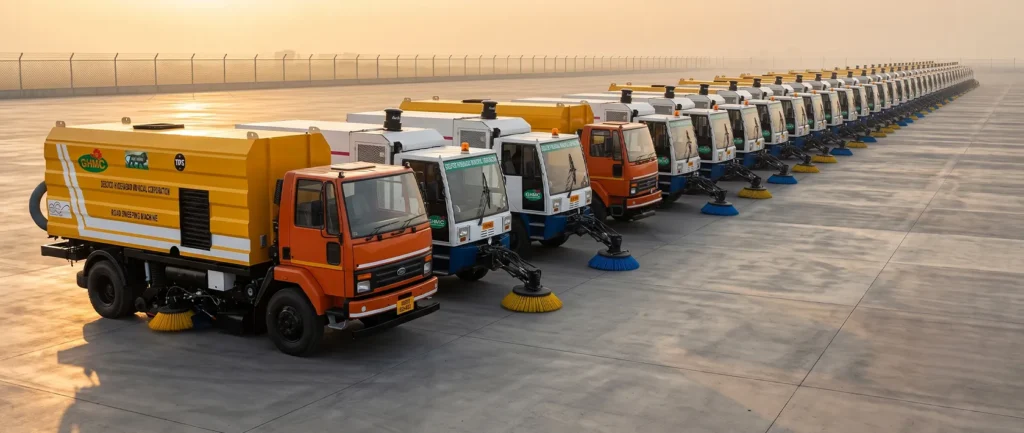
83+
Specialised Machines
54+ Lakh
Kilometres Swept
5
Major Cities & Ports
Mechanized sweeping
Narrow inner-city lanes to port yards and national highways, our fleet is matched to the geometry and debris profile of your roads.
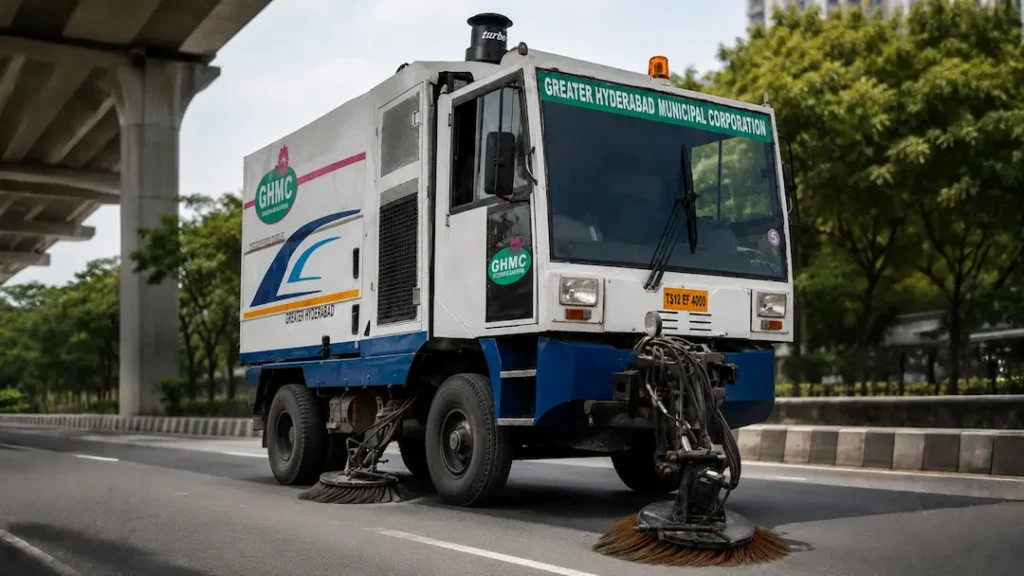
Self-Propelled Road Sweeper
Straight vacuum suction that lifts fine dust without re-suspension. A 3-metre cleaning width covers a full lane in one pass, with a single-operator model & the lowest labour cost per kilometre.
- 5 CuM hopper - fewer dump cycles, longer runs
- 620 L water tank - 4–5 hours of dust-suppressed operation
- Ideal for city roads, campus, airports and metro corridors
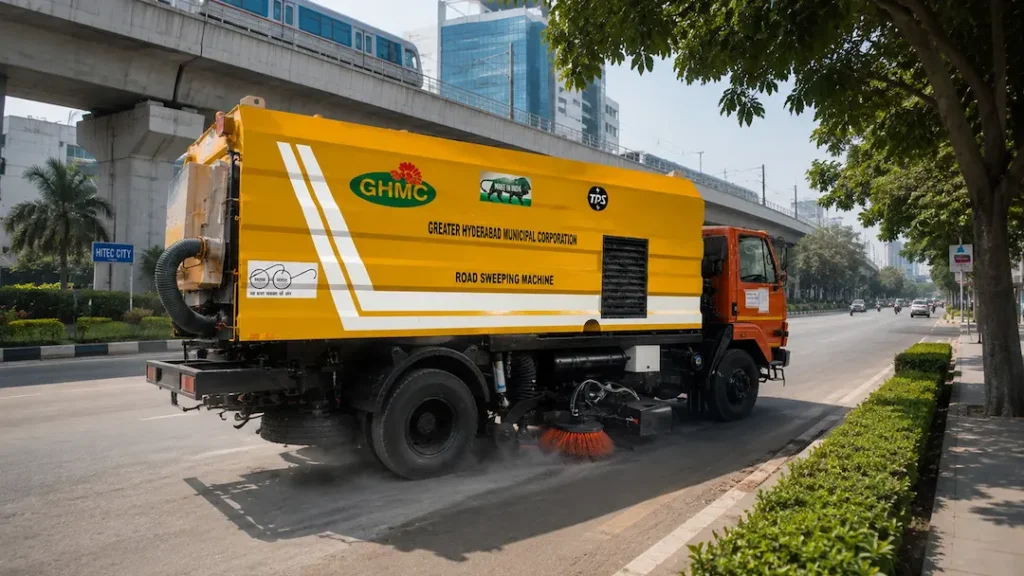
Truck-Mounted Road Sweeper
Self-transporting across the city with centrifugal blower suction that handles heavier debris and dust - built for arterial roads, highways and port operations.
- 6.5 CuM hopper - 30% more capacity, longer shifts
- 1,000 L water tank - all-day operation without refilling
- Operating speed up to 15 km/hr for faster arterial coverage
The 365-day difference
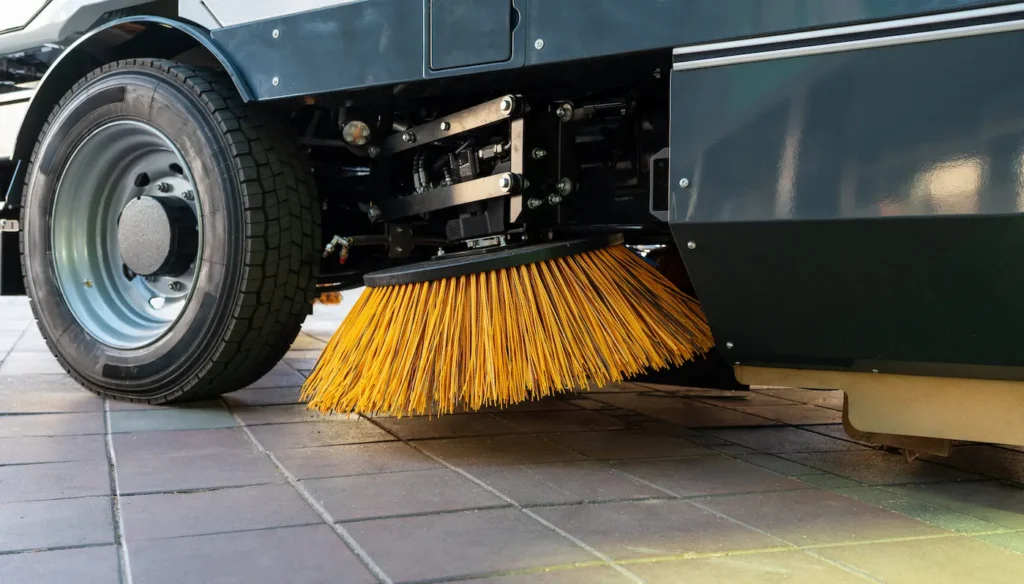
A road sweeper is not a truck with brushes bolted on. It is a specialised machine with suction turbines, hydraulic drives, brush assemblies, water circuits running punishing duty cycles 365 days a year. Any vendor can buy one. Very few can keep one earning its keep every single day. That gap between owning machines and operating them is where sweeping contracts quietly fall apart.
Engineering and servicing
Sweeper mechanisms are an order of magnitude more complex than ordinary commercial vehicles, and a machine standing in a workshop is coverage you are not getting. Our own engineering workshop, preventive maintenance schedules, and spares inventory. Built over 13 years and 83+ machines turning uptime from a promise into a system.
Operators who are specialists
A sweeper is only as good as the hands running it. It takes months to train an operator to read a road: adjusting suction for debris, judging brush pressure, managing water through a shift. So we invest in keeping our people because every operator who stays is route knowledge, machine care and consistency that shows up on your roads, day after day.
Built for every day of the year
Cleanliness that pauses is not cleanliness. Our shift structures, supervision, standby capacity and monsoon protocols are designed around one assumption: the roads must be swept tomorrow, whatever happened today.
Shining in a tender committee
Our contracts are structured around how infrastructure owners actually evaluate vendors: uptime, compliance, documented coverage and cost per kilometre.
Proven at Scale
54+ lakh kilometres swept under municipal and port contracts, coverage you can verify
Own Fleet & Workshop
83+ specialised machines maintained in-house, so uptime commitments are backed by our own engineering capability
Compliance-Ready
Operations aligned to Swachh Survekshan indicators, dust-suppression norms and documented service reporting
Transparent Reporting
Kilometre logs, route records and before/after documentation with every contract and built for audit
Faq's
Why does mechanised road sweeping need a specialist operator rather than a regular driver?
How is maintaining a road sweeper different from maintaining a truck?
Do sweeping operations really run 365 days a year?
What happens when a machine breaks down mid-contract?
Why does operator attrition hurt a sweeping contract?
Every operator who leaves takes route familiarity, machine feel and dust-management judgement with them and the replacement learns at your roads’ expense. Coverage quality dips in ways a kilometre log won’t immediately show. We hold on to our operators deliberately, because continuity of people is what makes continuity of service real.

Request a proposal shaped to your site
When you evaluate a sweeping vendor, don’t ask how many machines they own. Ask how they will keep them running on day 200. We’ll show you our answer in writing.